
Are You A Good Neighbor?
Wandering thoughts inspired by a church sign
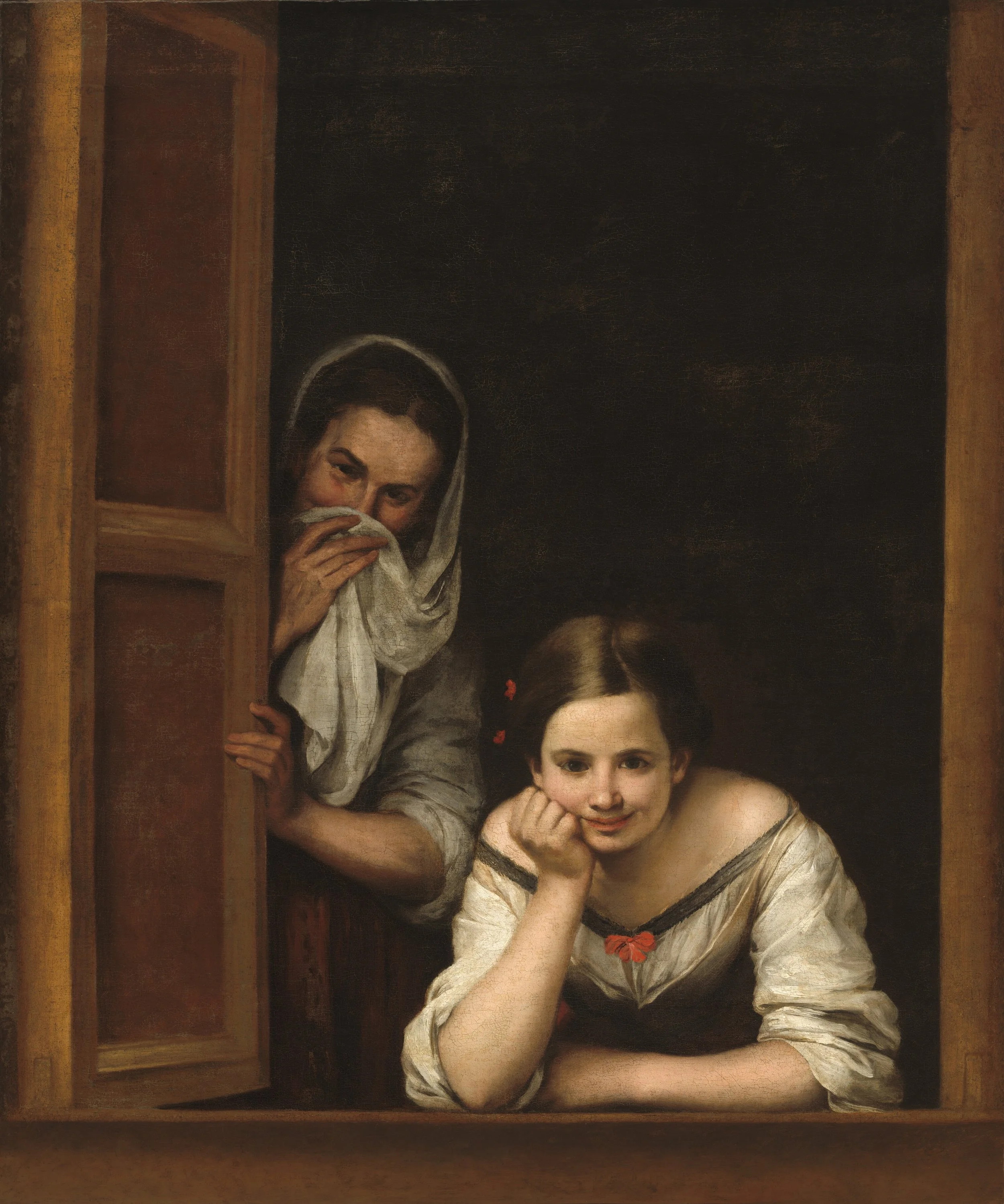
Two Women at a Window; c. 1655/1660; Bartolomé Esteban Murillo (Spanish); Source: National Gallery of Art
CEFR Level B2-C1
I was flipping through the 2010 Church Signs Calendar from Andrews McMeal Publishing. The September 23 entry is “Would you want yourself as a neighbor?” It got me thinking how I don’t remember Jesus ever asking someone if they were a good neighbor. He just talked a lot about what being a good neighbor looks like.
It’s curious from a teaching perspective because a key tenant of teaching, from what I’ve learned, is to at some point explicitly say what you want the student to know. Some approaches have the student discover the answer themself, but somewhere in the lesson, it’s important for the teacher to affirm that the desired concept has been discovered.
Jesus did say “Go and do likewise” (e.g. Luke 10:37b), but that’s still different from asking if the person thinks they are a good neighbor. That got me thinking about how the church sign question requires biblical knowledge along with knowledge of the standard application given to stories like “The Good Samaritan.” Without that background, a person who no one would want as a neighbor could easily say “Yes, I would want me as a neighbor because I want neighbors who are [race], [sex], [religion], [income bracket] - just like me.”
I earn a commission if you purchase through The Vareity Page Reads.
Another interpretation of the church sign question could rely on a cultural understanding of what it means to be a good neighbor. Is a good neighbor one that leaves you to yourself and keeps themself to themself or one that is always saying hello and trying to start conversation? Is a good neighbor one who comes from a family your family has known for generations or does something else determine how you define “good”? What makes a good neighbor changes by culture and generation. Still, even with using a cultural context for the church sign question, someone could easily answer that they would want themself for a neighbor because they want neighbors with demographic traits like themselves rather than focusing on character traits.
To me, this is the most likely response to that question in 2026 because knowing someone’s character means getting to know them. In order to get to know them, you have to talk with them frequently. In order to talk with them frequently, your schedules need to align and you both have to be willing to take the time for a chat. Add in the risks of some demographics talking to others enough to get to know each other and it becomes much easier to classify people based on external signs.
Do they look like me? Do they look like who I want to be? Do they maintain their yard and house the way I think is right? Do they socialize in a way that I would? Does everything I can see suggest that they are another version of me?
With such superficial evaluations of what makes a good neighbor, I’m uncertain what an equivalent 2026 church sign could be. It seems to me that the deeper issue is that self-evaluation can be uncomfortable. The people who are already self-evaluating don’t need a sign. The people who aren’t honest with themselves are unlikely to be changed by a sign. Maybe church signs are just a cultural phenomenon that can entertain posterity while giving historians and philosophers another way to research a time and culture.
Now I’m curious about church signs compared to church social media. Has social media replaced church signs for odd cultural sayings? Can we trace a topical change based on what’s happening in the broader culture? Does the medium (physical sign vs. social media) affect the messages put out? Are the messages published on social media answering “Would you want yourself as a neighbor?” With as self-centered as humans are, why is it so hard for some of us to evaluate ourselves?
And that is what I think about on a rainy Wednesday afternoon.

"That's Why You Were Born" is a modern Christmas carol that could also be used as an Advent song. The verses summarize the Nativity story. The refrain creates anticipation. The ending answers the "so what" question. This is a hymn-style SATB arrangement that offers flexibility in mixing soloists with full choir or congregation. This would be a fun piece for the choir to sing while actors perform a Christmas pageant.
Length: 1:00-2:00 minutes
Soprano/Melody Range: Bb3-F5
PDF Download: This is a digital product, so I can't issue a refund. If you experience a problem, please let me know.
This title is also available at JW Pepper and SheetMusicPlus.