
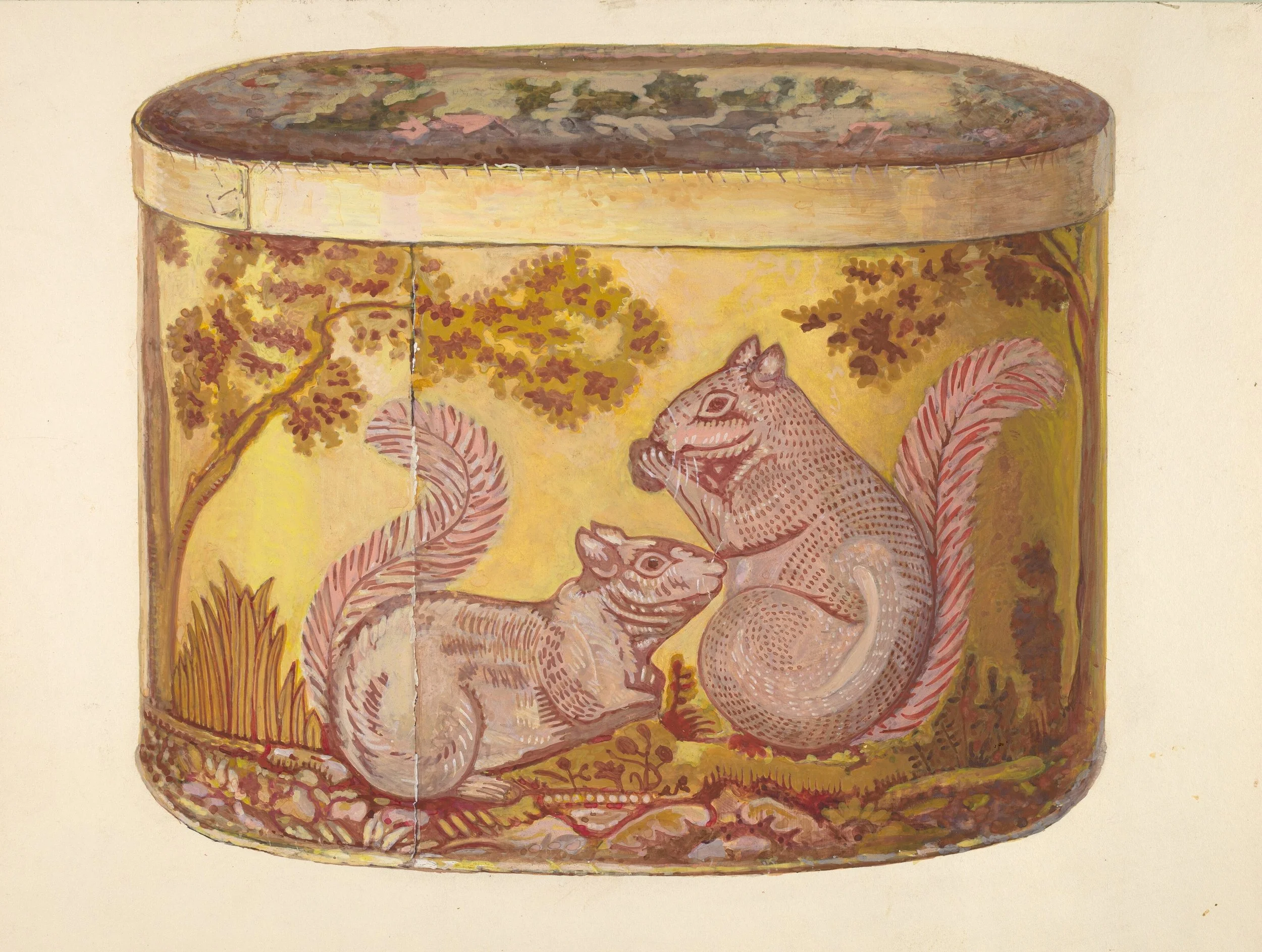
Bandbox; 1936; Arsen Maralian; American; Source: National Gallery of Art
CEFR Level B2-C1
They say autumn is a time of dying, that the earth goes to rest. Those things happen, but there is more. The cooler weather brings more mammal sightings. They exist in other seasons, but with fewer leaves, you see them more often. Not just the herd of deer that make their morning and evening browse from the backyard to the front, across the street, front yard, back yards, stand of trees, across the street again, and on to the rest of their circuit. The groundhog shows up around 3:45 every afternoon, nibbling, nibbling, nibbling, then racing away at the slightest suggestion of another mammal existing in its sight. All day the squirrels spiral up and down tree trunks and crawl to the farthest edges of bouncing slim branches before leaping across space to an even thinner twig terminating a branch. The birds call and fly and hover and peck. The mantis and walking sticks appear. A green lynx spider guards her nursery of orange baby spiders carefully contained in a silk cage large enough for them to swarm nearby leaves but small enough to confine them to a single stalk. The orb weavers turn utility lines into aerial traps for flying insects humans don’t see. Bats hold swooping feasts, removing more insects. With all this life about, why call fall the season of dying? (I understand from the perspective of an agrarian society, but for industrialized nations in the 21st century, it doesn’t make sense to me.)
I earn a commission if you purchase through The Vareity Page Reads.
When autumn comes, I always get the urge to read The Hobbit.
What we notice and value informs how we think.
When you read about millennials and younger generations leaving churches, do you mourn the death of an institution or do you take the time to see the life made visible by an ending?
When familiar forms of civic groups lose membership and have trouble attracting new members, do you bemoan the death of community spirit or do you look around to see what life exists outside your story?
When people stop saying the arguments that allow you to dismiss what you don’t understand or like, replacing them with arguments that force you to face what you would rather ignore, do you wail at the erosion of traditional values or start learning to identify signs of life that you previously thought were signs of death?
Fall doesn’t have to be your favorite season like it is mine. You don’t have to become someone who eagerly embraces change. But if you don’t learn to look deeper than what you are told something means, then you increase your chances that you will forever be controlled by another. If you don’t learn to acknowledge your feelings as valid and also to look for what exists that you might be missing, then you increase your chances of forever being stuck in a place of mourning “we used to,” never able to be part of forming the future.
We’re told autumn is the season of death. I see death that makes life more visible.
We’re told we’re in a season of the death of the church. I see that makes a life with Christ applicable to 21st-century life.
What have you been told is a death to mourn, but if you change what you see and value, turns out to be signs of life?
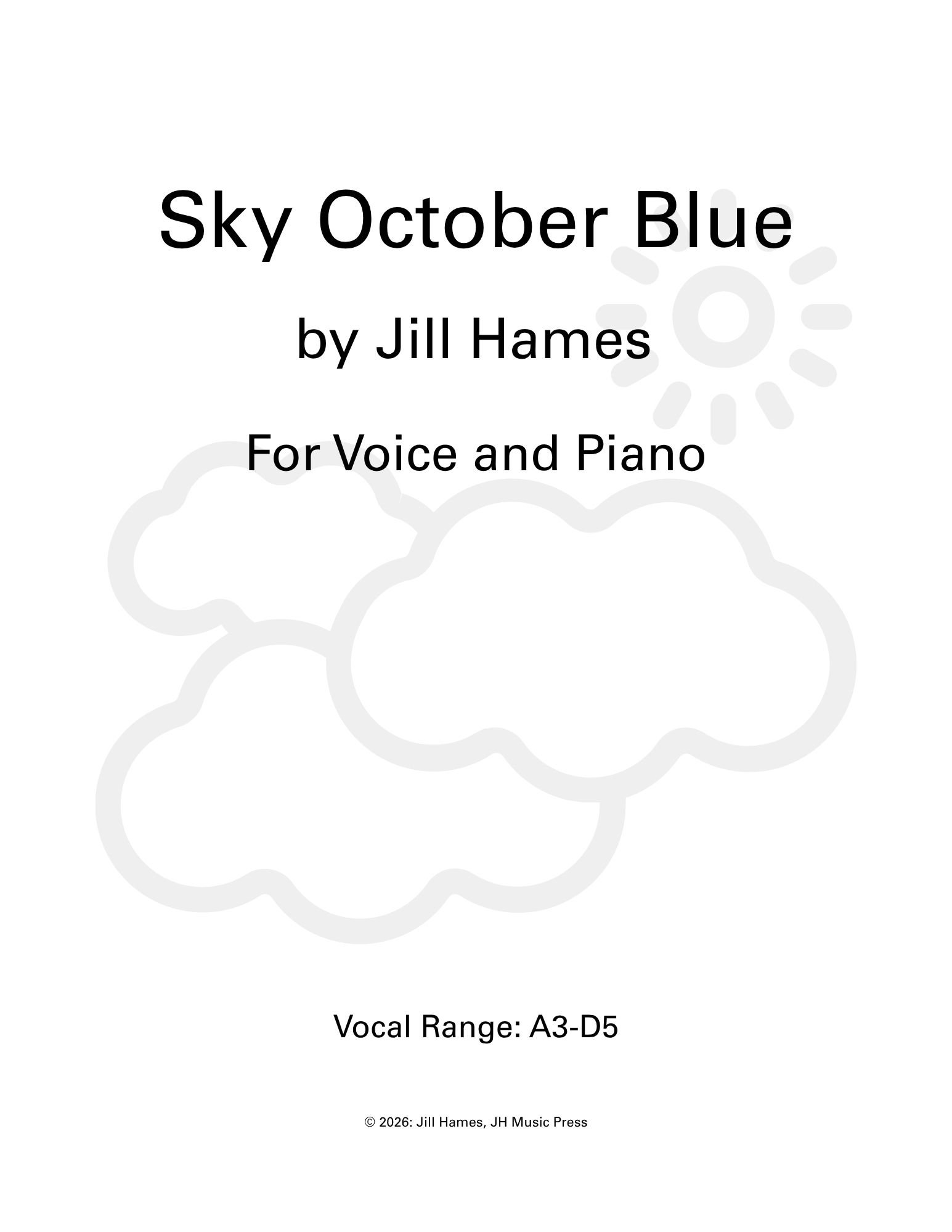
An ode to autumn skies for voice and piano, this short piece is great for fall recitals or teaching major and natural minor relationships.
For Voice and Piano
Key: A Major/A Minor
Vocal Range: A3-D5
Time: 00:01:00
Pages in Score: 2+
Themes: Autumn/Fall
PDF Download: This is a digital product, so I can't issue a refund. If you experience a problem, please let me know.
This title is also available at JW Pepper and SheetMusicPlus.