
My Brain Gets Stuck

Le Thresor des Parterres de l'Univers, Contenant les Figures et Pourtraits des Plus Beaux Compartimens, Cabanes, & Labyrinthes des Jardinages...; 1629; German or Swiss; Author: Daniel Loris; Publisher: Estienne Gamonet, Swiss; Source: The Met
CEFR Level B1-B2
“My hours will be different,” I said as the field supervisor handed out timesheets for us to fill in.
No one responded. They talked about how to record hours if you drove with the group versus driving alone, what to record for days where we worked ten hours instead of eight, and explained again paid and unpaid breaks.
“My hours will be different,” I said again.
No one responded. I had gotten sick partway through the 10 days of field work, spending a day lying in the truck instead of working. Did I count that as work time since I was there, not at home, comfortable? I tried again.
“My hours will be different.”
“Yes! Your hours will be different,” the field supervisor snapped in frustration.
I stopped trying to get an answer. It was one of those times when my brain couldn’t turn its thoughts into conscious words and then transmit those words to my speaking mouth. I took the sick hours off my timesheet, resentful that I had to fight through a sore throat so bad I could barely swallow and not even get paid for misery, but not knowing what else to do. I would have been mortified if I was told I claimed hours unfairly.
What Happens
How I reported my time isn’t the point of this piece. I only mention it because I know someone will wonder and I want your brain focused on my point: sometimes people are being annoying not because they don’t know better but because one part of their brain will not cooperate with the other.
Every time I opened my mouth that day, I was trying to ask, “How do I fill out my timesheet since I was sick and didn’t work that one day but I was still there on the job site?”
Do you feel frustrated right now and wonder, “Then why didn’t you say that?” That’s why I share this story. I tried to ask. I tried multiple times. You may not understand how it can be possible, but I promise you, if I could have made those words come out of my mouth, I would have done it.
This isn’t the only time my brain has gotten in a rut and said the same thing over and over, even though I wanted to communicate something else. From what I can tell, two factors are primary contributors to the phenomenon.
I feel embarrassed, uncertain, or otherwise worried about making a mistake.
I haven’t perceived a response, so I can’t tell if someone has heard me.
These factors can trigger the event independently or in concert. The first one is more likely to make the laser get stuck on a scratch. The second is more likely to happen when I’m in a group.
A third option is occasionally a trigger. This is when a thought is just on the edge of consciousness but the situation requires me to say something. Repeating whatever I can get out seems to be a way of pulling the fishing line, trying to bring the intuited thought into verbal existence. Again, it’s not intentional. Not being socially expected to respond until I have the words is a way to avoid this trigger, but that’s not always something I can control.
I haven’t found a solution in any of these situations. If I can make myself stop talking, that can sometimes get my brain to skip out of the track, but not always.
How to Help
These are my tips for people on the receiving end of someone speaking on repeat. Start by clearly identifying that you have not only heard, but also understood their words. Perhaps repeat back to them what they have said with a little extra context. In the opening story, my supervisor could have said, “Yes, your hours will be different because you didn’t work that one day.”
Alternatively, depending on the context, you could try to help them verbalize what they might be trying to say. Maybe ask, “Are you wondering what hours to record since you were sick?” Just be sure your tone is collaborative and not like you are trying to teach a preschooler how to use their words.
Again, depending on context and your tone, you might try naming the repetition. Perhaps, “You’ve said that three times. Is there something you’re trying to say that we aren’t responding to?” Mixing the naming with collaboration helps to keep it from sounding like scolding, but again, tone is everything here.
One final note. I’m only one person. I suspect there are as many ideas and preferences for how to help get someone out of a verbal brain rut as there are people who experience the event. Hopefully, by knowing that this verbal repetition irritation may not be voluntary, you’ll have the ability to imagine what else might be happening and use context to guide you in how to respond.
In Ministry
You might wonder what this has to do with being part of a church. Well, hopefully if you’re in a church, you’re also talking to people. You might even be leading a class. The topics discussed in church can be challenging. Some people might want to participate but struggle in the fast-paced group environment. Intentionally giving people a chance to speak, with enough time to think before it is their turn can help. Creating space to share thoughts without speaking in the moment could be an additional option.
Others may want to participate but feel embarrassed or uncertain. Helping them find the words to say their thoughts could empower them to speak more freely, but be sure you aren’t creating a situation where you’re telling them what to say. If you find that people in your group tend to struggle, maybe write out a few starting phrases or key vocabulary words to help with discussion. Explicitly say that someone can say one of the keywords, even if they can’t manage to form a full sentence and the group will try to help them find the rest of their words.
There are other scenarios and options. The important things are to remember that people are different, to assume positive intent unless proven otherwise, and to embrace a mindset of experimentation and adaptation.
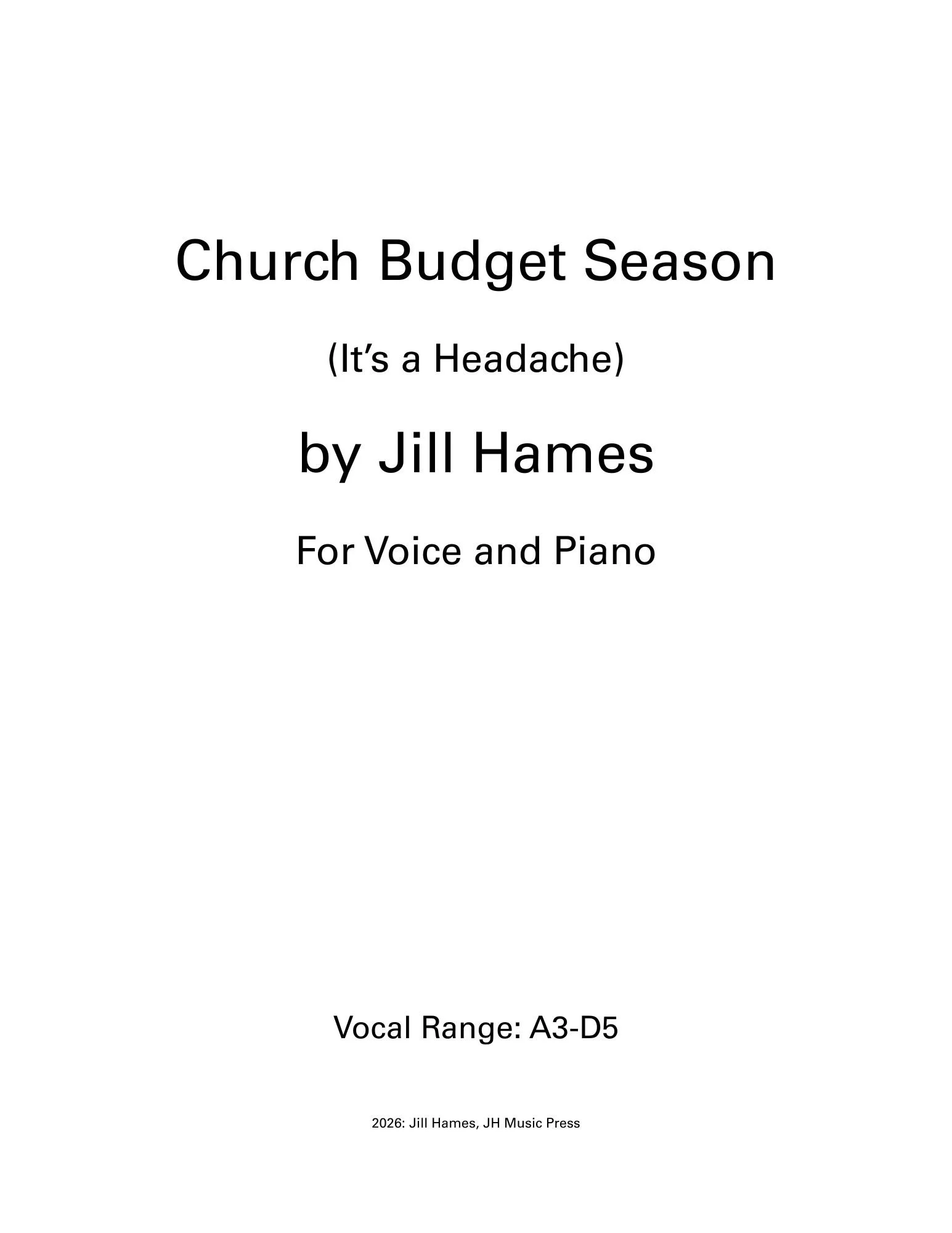
"Church Budget Season" is a humorous song from the perspective of clergy who dread working on the annual budget.
For Voice and Piano
Key: D Major
Vocal Range: A3-D5
Time: 00:02:00
Pages in Score: 1
Themes: Christianity, Church Seasons, Emotions, Protest, Humor
PDF Printable Download
This is a digital product, so I can't issue a refund. If you experience a problem, please let me know and I'll do my best to make it right.
This title is also available at JW Pepper and SheetMusicPlus.