
Violets, Dandelions, and White Clover
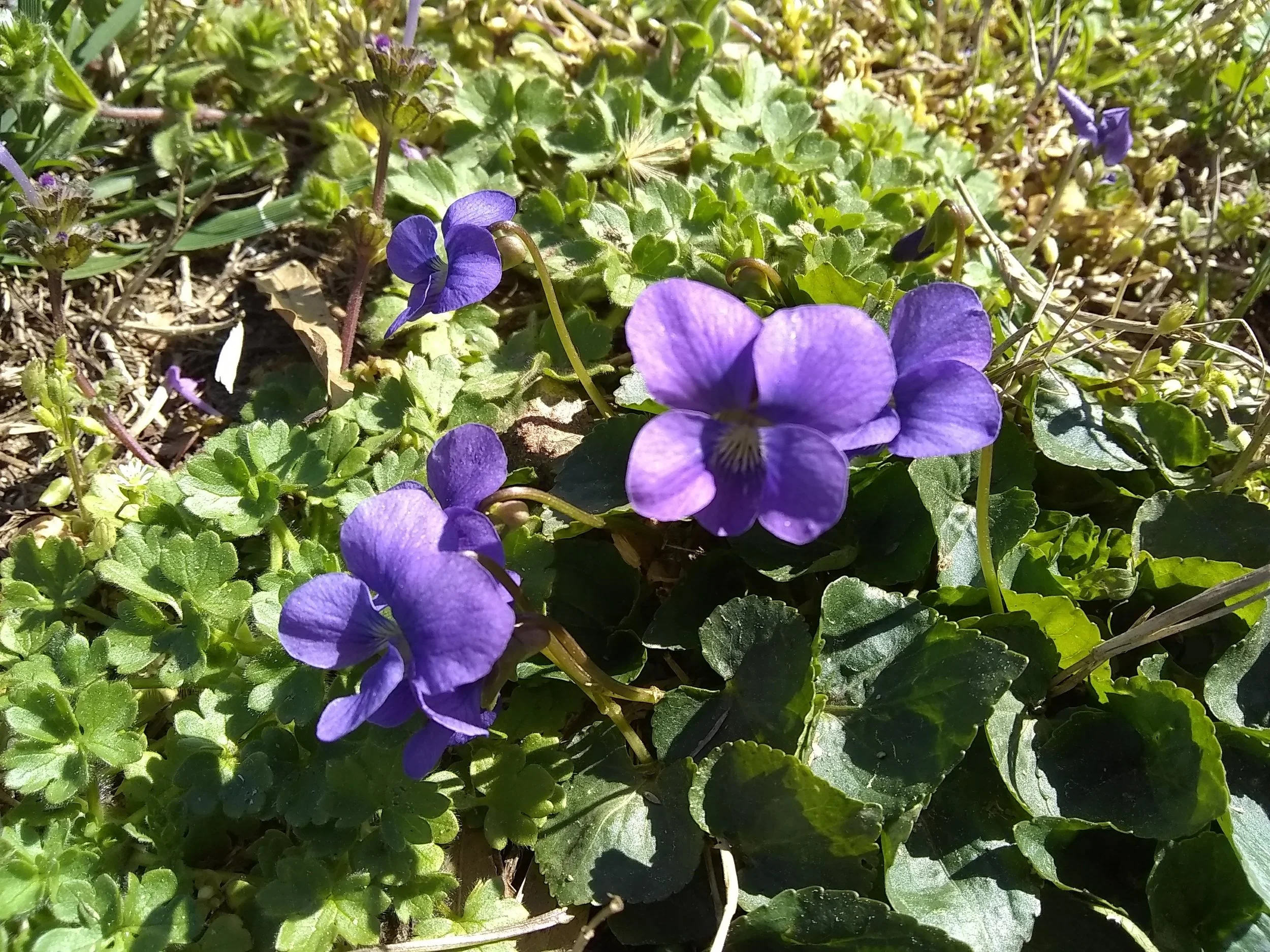
Photo: Jill Hames
CEFR Level B2-C1
On Substack, Wendy McCaig wrote about community thriving using an analogy to native, naturalized, and invasive plants. She used beautiful ornamental flowers, but the native-naturalized-invasive analogy got me thinking about violets, dandelions, and white clover. I also started thinking about how a similar analogy could apply to church systems.
I write this assuming you’ve read Wendy’s post. If not, go read that first.
The Plants
Violets (Viola sororia Willd.): Native to eastern North America
Dandelions (Taraxacum officinale F.H. Wigg. ssp. officinale): Naturalized or Invasive
White clover (Trifolium repens L.): Invasive
The first thing about these plants is that they are small. They are usually ignored unless someone considers them an annoyance. You are unlikely to see any articles titled “A Dandelion Garden Plan” or “Violets and Clover: The Stars of a White and Blue Mini Garden.”
A weed is a plant a human doesn’t want where the plant is growing. Violets, dandelions, and white clover are often considered weeds. The weeds, the undesirables, grow where desirable plants struggle.
Now, this isn’t a call for these three plants to be embraced without thought. All three can be challenging to remove, especially white clover. White clover is sometimes used to fix nitrogen in the soil, but once that task is done, the clover remains. It grows and grows and grows, taking resources from native plants. Unless intentional control measures are taken, you can end up with all clover and no native plants. No natives is bad for the ecosystem.
Dandelions are usually considered to be naturalized. They didn’t originate in the US, but they also rarely cause harm. Only Alaska and Oregon list dandelions as invasive. We could question whether this is because other states have bigger problems or if those are actually the only two areas where dandelions are a problem, but that’s a topic for another article. For now, let’s think about the southeast and mid-Atlantic regions, which is what I know the most about. In those areas, dandelions are listed as naturalized.
Violets are natives. Without violets, the fritillary butterflies would not exist. Violets adapt to a range of soil types, moisture conditions, and light levels. They also spread and spread and spread. This is bad for people who want grass lawns. This is good for the fritillary, native bees, native birds, and other parts of the ecosystem that benefit from violets. Deer generally do not enjoy violets. This is good for landscapers who want spring flowers but also have hungry deer walking by twice a day.
The Church Analogy
I’ve intentionally not named specific positions or examples so that you can think about how the analogy may apply in your church context.
In church (or any group, really), we have the people who have always been there, working in the background to keep things going. If pressed, we might acknowledge their helpfulness or admit their work brings some beauty, but nobody’s rushing to take on their tasks and decisions get made without thinking about how it affects them or how it might affect the greater ecosystem if their efforts are limited. They may even sometimes be considered nuisances. These are the violets.
Then we have the people who we accept as inevitable annoyances. Like a dandelion, we might wish they weren’t here, but they can be entertaining at times and generally don’t cause harm. They might not be adding any value but they aren’t actively causing problems, either. If we took the time to get to know them, we might discover they have gifts to give, but those gifts aren’t what a church typically wants to use, so it doesn’t look.
Then we have the white clover, the people or ideas we purposefully brought in to serve our purposes. Only later did we realize that the church environment allows them to grow to the point that others are hidden, even killed off. Once we realize this, we might try to contain the white clovers to a designated area. That doesn’t work. We might try to remove them completely, but the roots are tenacious. Even if we succeed in removing the clover and planting new ways of thinking, the old, hidden roots send up sprouts here, there, and everywhere. It feels like we spend our life trying to uproot the old, smothering methods. We may spend so much time on remediation that we have nothing left to tend to the things that lead to a healthy church ecosystem.
Violets, dandelions, and white clover can be people, programs, or ideas. The dandelion and white clover are imported, perhaps originally with good intentions. They may even have served a beneficial purpose, but their ultimate effect is on the spectrum from neutral to damaging. In contrast, the violet, the plant we may occasionally praise but try to keep contained and sometimes label a weed, is the one that can give the greatest benefit if allowed to spread and grow according to its nature.
We could think about ourselves as violets, dandelions, and white clover, too.
Signs that we are white clover could be when our work grows and grows and grows, overshading and crowding out what is needed for the natural ecosystem to thrive. We might be doing some good, but at what cost? When does what is useful for fixing a problem become a harmful constant?
Maybe you relate to the dandelion. In your home environment, you contributed to the thriving of the natural ecosystem. You were useful to other humans. Then you got transplanted with the hope that you would fulfill the same purpose. Sometimes you do, but outside of your natural environment, your usefulness is limited. Not everyone understands what you can give. Maybe you even realize that your presence is causing harm and you should remove yourself.
The violets don’t have it any easier. The violets are essential for the right things to thrive. Violets grow right where they are most useful to the ecosystem and can thrive in a variety of habitats. But they are underappreciated, frequently removed, and sometimes crowded out by white clover. Maybe you have much to give but outside forces prevent you from living into your calling. Maybe you sit in your spot, quietly doing what you do best. Those who benefit couldn’t survive without you. Those who understand your role do what they can to support and protect you. Those who consider you a weed try to get rid of you. It isn’t an easy life, being a violet, but it is an important one.
Do you see yourself as a white clover, dandelion, or violet? Which of these is most prevalent in your church ecosystem?