
Systems, Safety, and Change
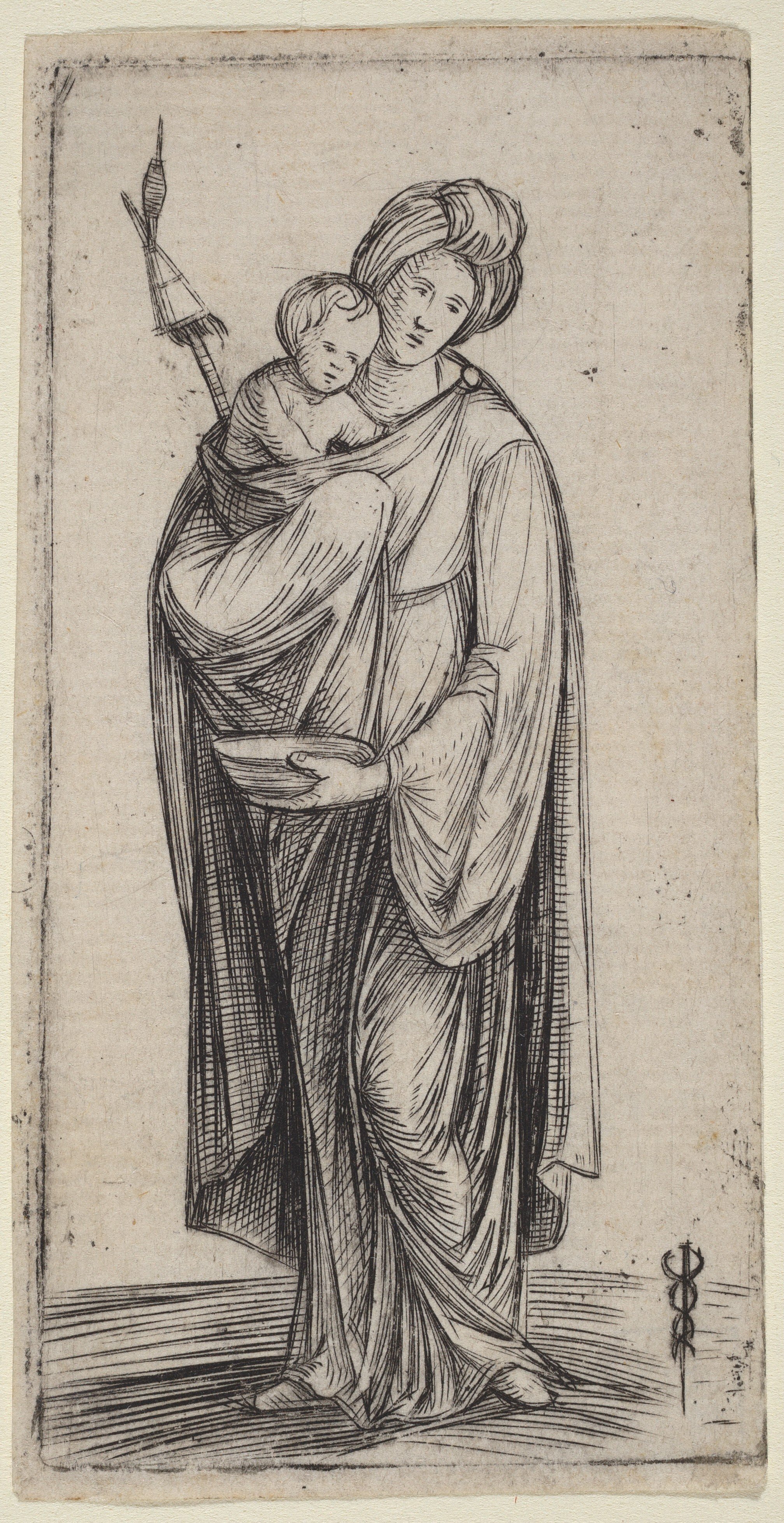
Woman and Child with Distaff; Jacopo de' Barbari; Artist, Venetian; c. 1460/1470 - 1516 or before; Source: National Gallery of Art
CEFR Level B2-C1
In The Two Sophias, Wendy McCaig describes a girl’s delight in exploring nature. The little girl follows a frog. There is no mention of her wearing long pants to protect from poison ivy, insect repellent, closed-toe shoes, or any other safety measure. Those things may have happened, but the story leaves them out. The post carries a feeling of wonder and freedom.
As part of my hospital ministry/mentored chaplaincy class in seminary, we are reading, among other things, Being Mortal by Atul Gawande.
In Chapter 4, a daughter looks for a nursing home for her father, even though he will hate it and she will hate committing him there. “‘To me, safety was paramount…’ she said…I pressed her. Why?...She didn’t know how to answer.” (108)
I have a theory why. Because US culture makes our entire life revolve around limiting risk, often at the expense of experience and quality of life.
Imagine how Wendy’s post would read if she wrote all the things the adults did to keep the girl safe. What words would describe the emotion of that type of post? What do we learn in Wendy’s version that we wouldn’t learn in a post filled with adults worrying about safety?
I won’t argue that safety isn’t important, especially when taking care of people who can’t make informed decisions for themselves or don’t have the ability to understand how their actions affect others. At the same time, I can observe that playgrounds are less fun than when I was a child, largely due to safety features. I can recount conversations I had as a young professional working with youth where adults in partner organizations gave “advice” by saying “in the ‘70s we just [did a thing that is now either illegal or socially strongly opposed as unsafe]” and then thinking that solved the challenge I faced. I can observe that when adults constantly fuss at kids about safety during a nature excursion, the kids are whiny and bored compared to kids with adults who let them play with the result of them occasionally getting poison ivy or a scraped knee or blisters from wet shoes. Again, I’m not interested here in arguing for or against the safety standards of any generation or family. My point is that even without doing formal research, my experience says that my generation has lived a life generally ruled by the one rule to rule them all: Stay Safe. That by default means that I was raised by an adult society that considered safety to be of primary importance.
When a person has ordered their entire way of thinking around keeping themselves and others safe, it seems obvious to me that they would then consider safety over quality of life when thinking about how to care for their frail parents. When a person’s role changes from childcare to elder care, there’s not a switch that flips and allows them to reorder a lifetime of priorities.
Then I think about church. Church, at least in the US, might be the one place where adults don’t care about the safety of vulnerable people (#NotAllChurches). I remember one church where I said that all childcare workers should have background checks. My statement was brushed aside with explanations about the church being small, not wanting to put a barrier to volunteer work, and we all know each other. To me, it was another version of “in the ‘70s we just…” I also think of this event as evidence of a system that relies on following personal feeling (and no, calling your feeling “the Holy Spirit” does not by default make it more reliable), avoiding uncomfortable conversations, and preferring immediate convenience. Those priorities might be common to humanity, but church leaders need to be willing to go beyond what is easy and familiar.
“‘To me, safety was paramount…’ she said…I pressed her. Why?...She didn’t know how to answer.” (108)
Let’s change that quote to be about a Christian belief.
“To me, having an altar call every Sunday was paramount,” she said.
I pressed her. “Why?”
She didn’t know how to answer.
Or how about this.
“To me, the gospel means someone has said a prayer where they become saved,” she said.
I pressed her. “Why?”
“Because that’s what the Bible says,” she responded.
Fill in your own scenarios. Now, remember that people can only learn so much at one time. Maybe the person doesn’t know why she thinks an altar call is essential to a church service because she has been spending her time learning what the Bible says about gender or marriage or science. We shouldn’t shame people for not knowing.
At the same time, if our churches produce long-time Christians who only know “I don’t know” or “that’s the way it is” or “because the Bible says so” as reasons for their beliefs, that’s something the church should be ashamed of. I’m not advocating for teaching people absolute answers when no absolutes can be known. As Paul Kalanithi says in When Breath Becomes Air, “It is irresponsible to be more precise than you can be accurate.” (95) I also believe we need to accommodate individual intelligence, interest, and capacity. What I do advocate for is giving people permission to ask questions and teaching them how to think through theological concepts.
My concern is that when it comes to teaching theology and doctrine, churches default to Safety First. In a church context, this means not upsetting anyone (or at least, the largest donors or most established members), not risking alienating people by teaching on subjects that require foundational knowledge, not addressing complex topics because there isn’t one right answer or because we are afraid knowledge will make people ask questions that will challenge other tenets of our tradition. It is shameful that a clergyperson has to consider if they will lose their job if they upset an influential congregant. Even if they don’t directly lose their job, will the emotional pushback be enough that any sane person would withdraw or break?
There does need to be accountability. Clergypeople shouldn’t be allowed to say whatever they want without being challenged. I don’t think there is one perfect way to resolve the tension of holding teachers (and all people who speak in church are teaching) accountable while also giving clergy job security that doesn’t hamper spiritual and intellectual honesty.
Safety is important, but when teaching/preaching, it shouldn’t be the one rule to rule them all. At least, not if it’s applied in a way that reduces quality of life. Let’s not actively create systems where people are left facing the hardest decisions of their lives with nothing more than cliches or “I don’t know. It just is.”
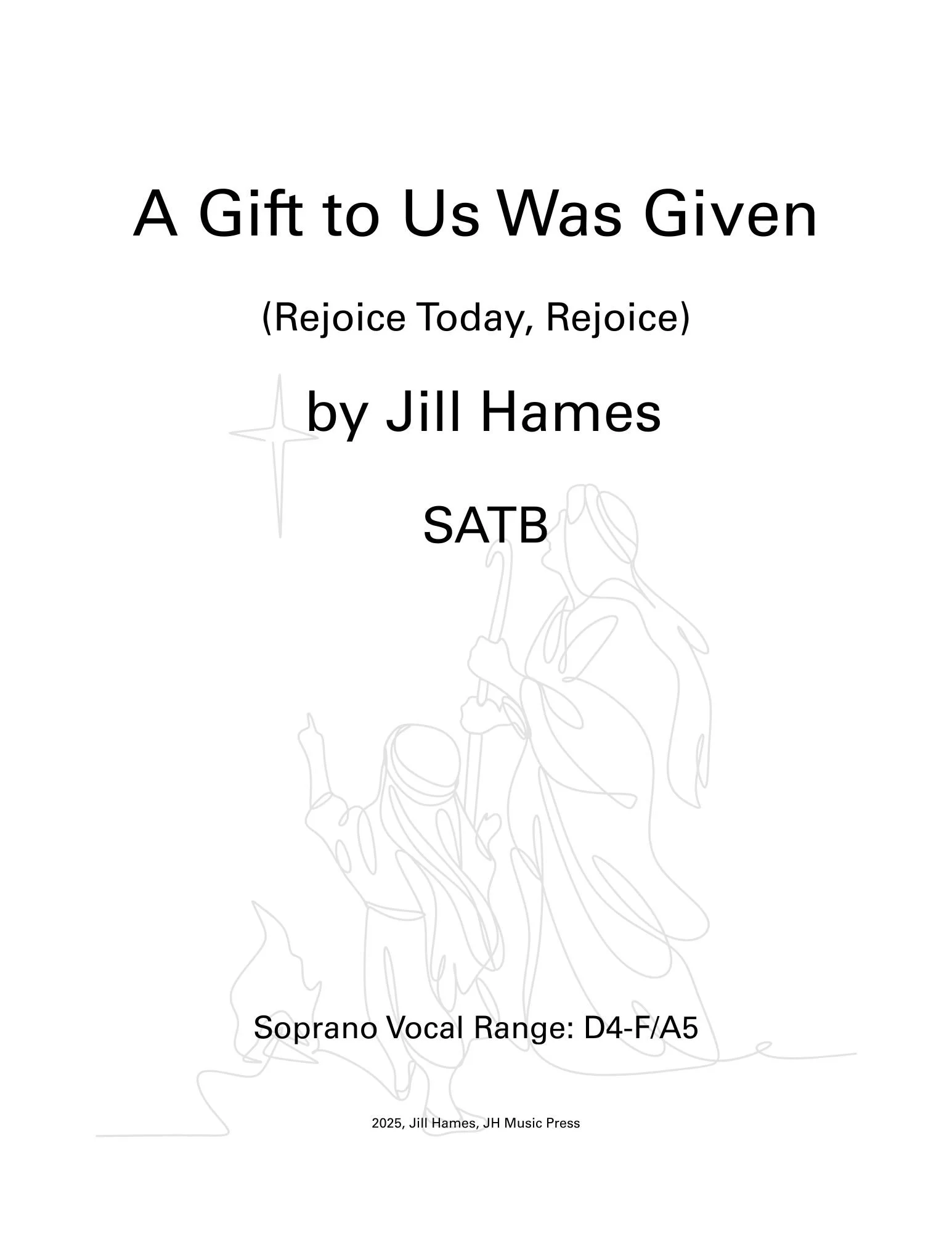
"A Gift to Us Was Given" is the Christmas story in four verses and a refrain. The verses are in D minor, offering peaceful joy as listeners contemplate the meaning of the words. The refrain, in F major, is a joyful response to the significance of what the verses tell. This new Christmas carol in a gentle 6/8 is arranged for be accessible to the average congregational choir, but sopranos have the option of celebrating with A5.
For SATB - Hymn-style arrangement
Key: D Minor, F Major
Soprano/Melody Range: D4-F/A5
Time: 1-2 minutes
Pages in Score: 1
PDF Download
This is a digital product, so I can't issue a refund. If you experience a problem, please let me know.
This title is also available at JW Pepper and SheetMusicPlus.