
Gods of Wrath
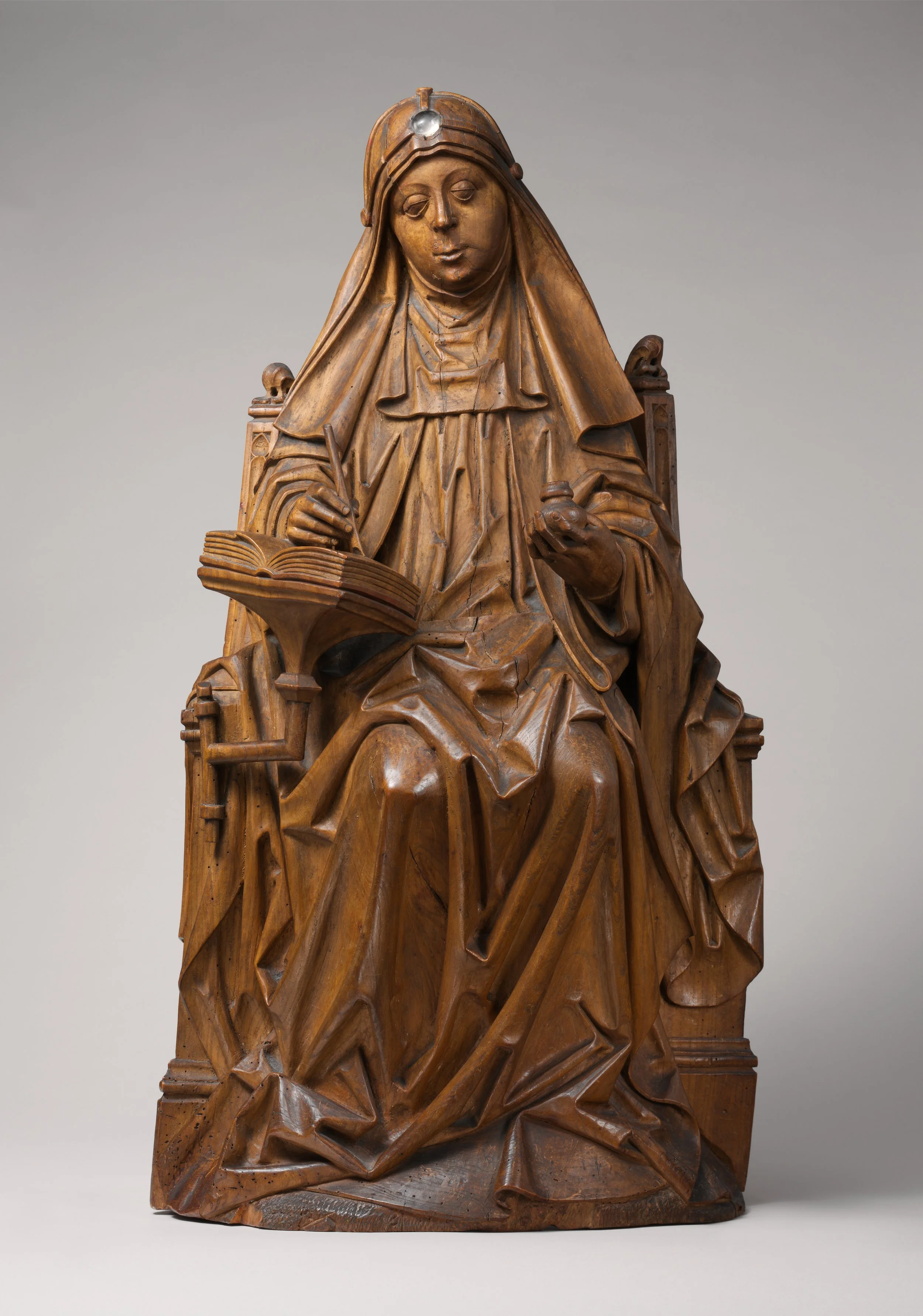
Saint Bridget of Sweden; ca. 1470; Master of Soeterbeeck
CEFR Level C1-C2
Humans really like thinking a deity is angry with them.
Search the internet for “deities gods goddesses” and browse the results. Many cultures have a god or gods that need appeasing. Some, like Marduk of Babylonia are depicted as being cruel, but also showing mercy. Some, like the apu of the Andean mountains are described as protecting people but also harming them if made angry. Greek Zeus and Roman Jupiter are depicted as powerful beings with the mental development of a spoiled teenager.
Then we come to the Hebrew God of the Old Testament. This God, according to the tales, has more power than any other deity he encounters. This god also expects very precise rituals in his honor and throws a temper tantrum whenever he feels ignored or those rituals are not performed. When humans follow his rules and give him enough of the attention he craves, he makes their lives easy and gives them all they need to flourish. Humans have to pay a price for this protection, though, because this god requires blood in order to be happy, but forbids human sacrifice except when he specifically requests it.
Human blood is so special that, as we move into the New Testament, this god is so fed up with humans not being perfect that he needs some very powerful blood from a very special human to keep him from destroying them all. Of course, no human is pure enough to fulfil this role, so this god sends himself as his son as a substitute human for the most significant human sacrifice in history. Over time, people began to end this story with an explanation that it is a sign of love that a blood-hungry god sent his son for the primary purpose of being a human sacrifice. Some even add that if a human does not claim to believe that this blood is a substitute for their own, then the blood-hungry god will allow their life to be miserable now and will torture them forever in the afterlife.
Does that framing of God and Jesus offend you?
The academic term for that telling is “the penal substitutionary theory of atonement.”
This theory is common in most Christian traditions that come from the Reformation.
If you are unfamiliar with the term, read up on it, then try to tell the story without using academic or church language. Tell it like you are an unbeliever using the literary and spoken representations of this god to form a picture of his character. If the story you end up telling is one similar to mine, you might have questions:
Why is this god any better than any other chief god?
Why is a god that demands human sacrifice a god worth serving in a culture where people don’t think deities have much to do with the running of the world and human life?
How is a blood-hungry god that demands human death a loving god?
Given all the non-violent stories of Jesus in the New Testament, why do so many Christians fixate on the angry blood-lusting god?
Those are good questions. If you haven’t caught on by my lack of capitalizations, this is not the theory of atonement that I find most convincing and I think it describes a god that is not the one true God. There are many reasons for that, but one of them is how it contradicts the God Jesus represents. I think it also misrepresents the God of the Old Testament, but I’ll focus on Jesus today.
If we read all the Gospels, the majority of the stories are about Jesus being kind to people. If it is true that human nature doesn’t change across time and culture, then we can infer that many of the people Jesus helped didn’t deserve the kindness he showed them. Under penal substitutionary theory, they deserved Jesus-God’s violent anger. The few times Jesus is shown in anger or violence, it is worth considering if the anger was directed at the people themselves or at the systems that made it easy for people to do the things Jesus objected to. I’m not counting the frustration Jesus showed to people who tried to trap him with their religious learning because even in those encounters, Jesus doesn’t smite them with leprosy or whatever.
Even in the cleansing of the temple, we don’t have a record of X people injured or that all lost their livelihood and their families died destitute or the sellers’ hands shriveled up or any other act of destruction against the humans. Yes, the sellers lost income with broken items and the time it took to clean up, but even with that, this isn’t a case of the God Almighty using the Fist of Judgement on those whose actions displeased him. Neither did Jesus withdraw with his disciples and teach them about how those vendors needed to offer sacrifices of restitution in order to be cleansed from their sins. (John 2:13-21)
All through the Gospels, people wanted Jesus to be the conquering king taking vengeance on Israel’s oppressors. All through the Gospels, Jesus-God refused to act in violence towards one of the cruelest empires of the time.
The way penal substitutionary theory is usually talked about in churches, through sermons, traditional hymns, contemporary songs, and comments like “Jesus took my whoopin’ for me” make the god referenced sound horrible and little different from any other entitled deity. It also makes it sound like this theory is a proven fact instead of an attempt to explain something humans don’t understand.
There is some biblical support for the penal substitutionary theory of atonement, but like all theories, it has problems. I think the problems are big enough that this view should be retired from prominence. There are several other theories of atonement, some older than the penal substitutionary one. Each has support from scripture and church history, and each, like all theories, has problems. It is well worth a devout Christian’s time to have a basic understanding of the various theories.
Start with these terms:
Ransom (or Christus Victor)
Recapitulation
Satisfaction
Moral Influence
Scapegoat
There are plenty of scholarly works about how each theory came to be and what was happening in the culture at the time it developed. Here are a few designed for non-academics to get you started:
Every Woman a Theologian by Phylicia Masonheimer (One chapter is devoted to doctrines of salvation, which touches on atonement)
After Class Podcast Series:
Indirectly about penal substitutionary theory, but well worth reading:
“What if God’s Wrath is not Anger?” by Christy Lynne Wood
Stepping back from that academic approach, as I scan across cultures throughout history, I see a pattern of humans worshipping an emotionally-stunted god who will cause them problems if not appeased. Someone could argue that this is because this is the nature of God, which was made known to all people from the creation of the world (Romans 1:20). On the other hand, someone could wonder what a truly kind and loving God would look like and read the scriptures with that question. Someone could look at all the scholarly work and recorded personal experiences that speak of a God who is not waiting to strike down any who dare step out of line and ask why, when there is an option, anyone would willingly serve an all-powerful toddler?
One answer is because it gives humans divine permission to be cruel to others. If God causes human suffering as punishment when they don’t give him what he wants, then people who take God as an example of how to act have justification for causing human suffering as punishment for not getting what they want, too.
Another answer is because they have not been told of a God of love and justice, a God who wants to save humanity and restore creation, a God who does not ignore all the horrific things humans do to each other but who also refuses to turn people into puppets.
How can they believe if they have not heard? How can they hear if no one tells them? (Romans 10:14)