
Six Facts About the Liturgical Calendar
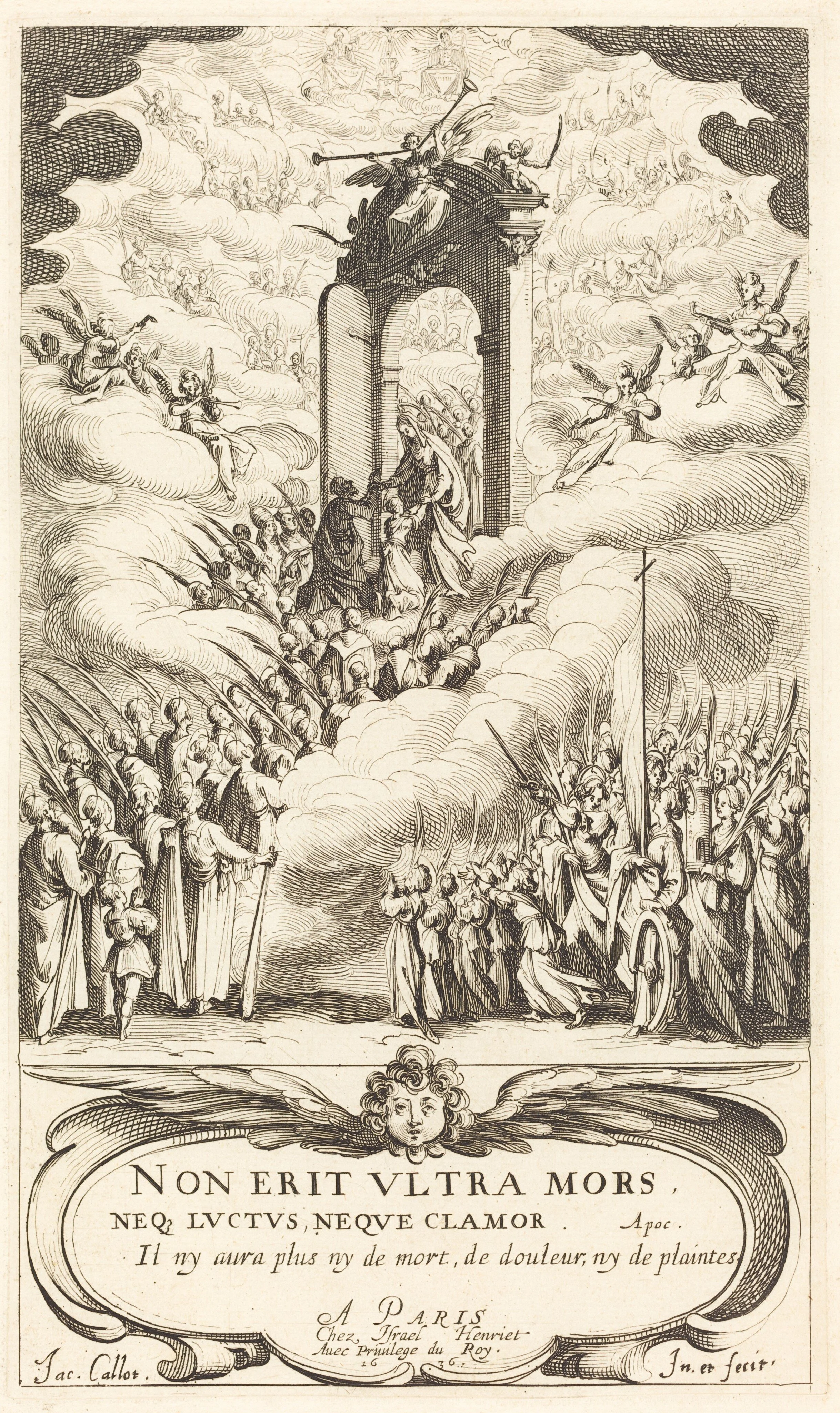
Frontispiece for "The Calendar of Saints"; 1636; Jacques Callot
CEFR Level C1-C2
Updated July 20, 2026
Originally Published November 27, 2023
If you weren’t raised in a Christian tradition that uses a liturgical calendar, you might wonder why it is and why it matters. Here are a few quick facts about the Church calendar.
1. The Christian liturgical calendar dates to the 4th century.
Some Christian holidays were observed long before the 4th century, but by the 500s, things were becoming standardized, at least within certain regions. Eastern and Western Christians developed similarly, but with differences. There were also Christians in Africa and India, but this post is about the liturgical calendar of the Western Church. In the early years, the Western Church was the same as the Roman Catholic Church.
2. The Christian liturgical year is also called the church calendar.
This makes sense since the liturgical year guides the celebrations and focus of a church. If you’ve ever heard of a lectionary reading, those readings coordinate with the liturgical calendar. That’s why you’ll hear the story of Jesus’ birth around Christmas and not in the middle of summer or at Easter.
3. The Christian liturgical year allows for a range of emotions.
Throughout the church year, there are days or weeks dedicated to reflection, remembering, anticipation, commemoration, sorrow, discipline, and celebration.The historic church, like some churches today, did not demonize any emotion that wasn’t happiness and joy. Early Christians knew that God was with them, even when they grieved. That knowledge influenced the communal observances of the church year.
4. The Christian liturgical calendar commemorates the birth, life, death, and resurrection of Jesus Christ.
Some church traditions also commemorate saints and other people or times that were important in Christian history. Commemoration is not the same as worshipping. Although some Christian traditions will pray to saints, asking them to speak directly to God on behalf of humans on earth, this is not the same as commemorating or worshipping them. Even traditions that do not believe in formal saints will commemorate people. Putting on a play that has the Apostle Peter as a main character is a way of commemorating Peter. Singing a song about Zaccheus running and climbing to get a glimpse of Jesus is a way to commemorate Zaccheus. These plays and songs might not be part of the official liturgical calendar, but they do show that even Christian traditions who are not liturgical will perform actions with similar intentions.
5. The Christian liturgical calendar has changed over the centuries.
The overall concept and primary holidays are consistent, but there have been changes throughout the centuries and across Christian traditions. One example is that St. Valentine no longer has an officially-celebrated feast day among Roman Catholics, although it is permitted to celebrate Mass on St. Valentine’s Day.
6. Christianity isn’t the only religion with a liturgical calendar.
A liturgical calendar is simply a set series of religious observances throughout the year. Any religion that has specific days dedicated to certain observances can be said to have a liturgical calendar. For example, Muslims have a liturgical calendar because their religion causes them to celebrate or observe certain events at set times each year.