
10 Reasons the Samaritan Woman Might Have Been At the Well
And none of them have to do with her sexuality
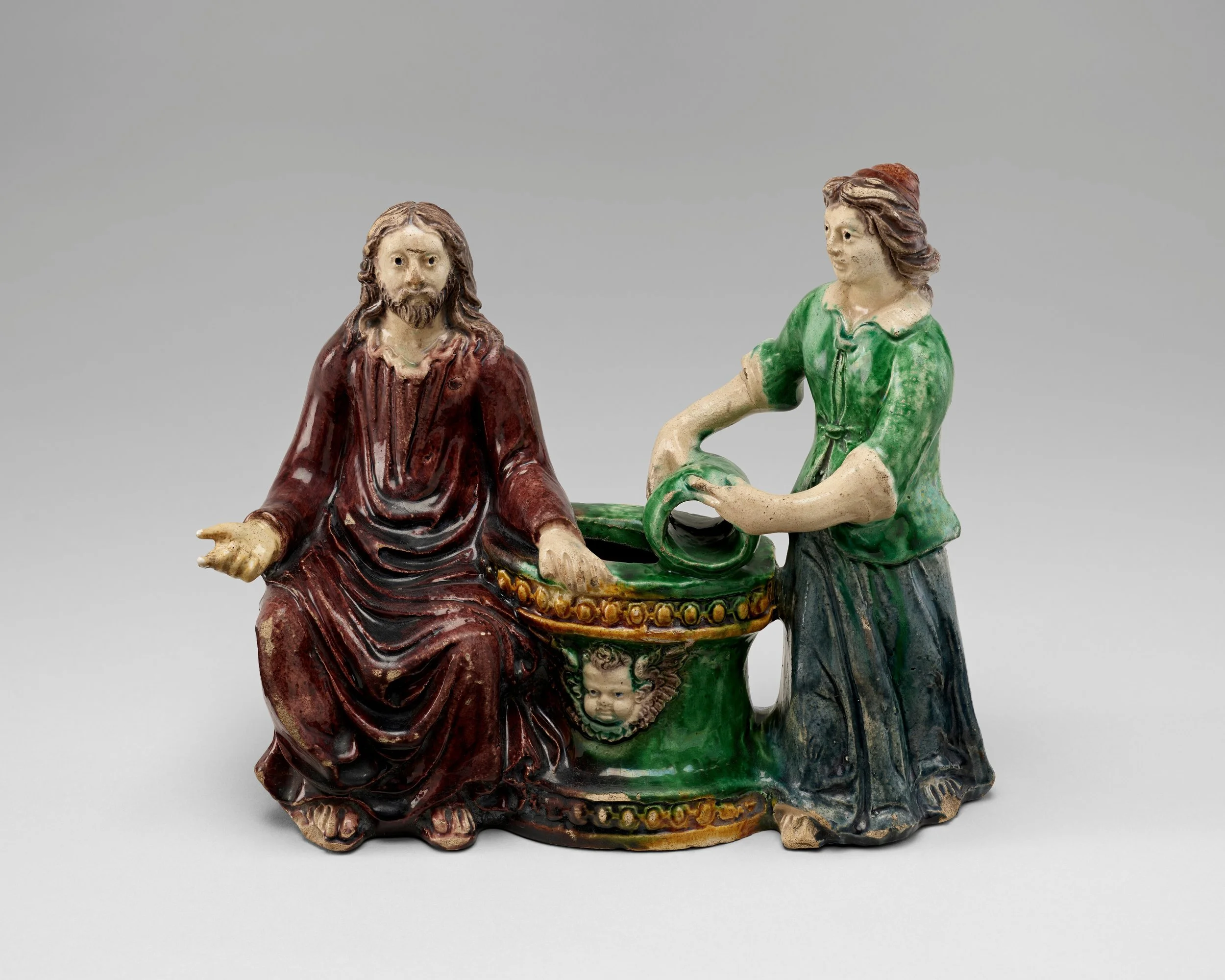
Christ and the Woman of Samara at the Well;early 17th century; Probably Avon Pottery; Source: National Gallery of Art
CEFR Level B2-C1
Here is a list of reasons the Samaritan woman might have been at the well in the middle of the day. Notice that none of them have to do with her sexuality.
She noticed that her disabled neighbor was running low on water and took a special trip to get some for her.
Her child vomited and she had used up her morning’s water in extra cleaning.
A man got angry and turned over the water jug she had filled in the morning.
She received an unexpected visitor and she needed extra water.
A rodent contaminated the water she had collected that morning.
Someone thought it would be funny to pee in her jug full of water.
Children were playing and knocked over her water jug.
A goat got loose and kicked over her stew pot, so she needed more water to start again.
A neighbor told her that she was so overwhelmed with childcare that she hadn’t even refilled the household’s water jugs that day, so the Samaritan woman helped her by running that errand.
She shared her morning’s water with a neighbor and now was getting more to top off both their jugs.
5 More
Family expectations meant that midday was the easiest time for her to go out for water.
A man was being obnoxious, so she took a walk to get water as a way to find some peace.
Someone near her house burned something stinky and she needed some fresh air, so she went to re-fill the water jug.
She didn’t have enough water storage for a day’s needs, so she had to re-fill more often than other people.
She was working on a household project and needed extra water.
What other reasons can you think of that a perfectly normal woman might go get water in the heat of the day?
The bigger point is, we don’t know why she was there. Since we don’t know, we shouldn’t form a conclusion. If we don’t have a conclusion about why she was there, then we shouldn’t preach, teach, share, or write with a focus on her motivations or lifestyle. Without a focus on the woman, the focus is freed up to be put on the interaction between Jesus and the woman.
Let’s be careful to not present hypotheticals as facts.
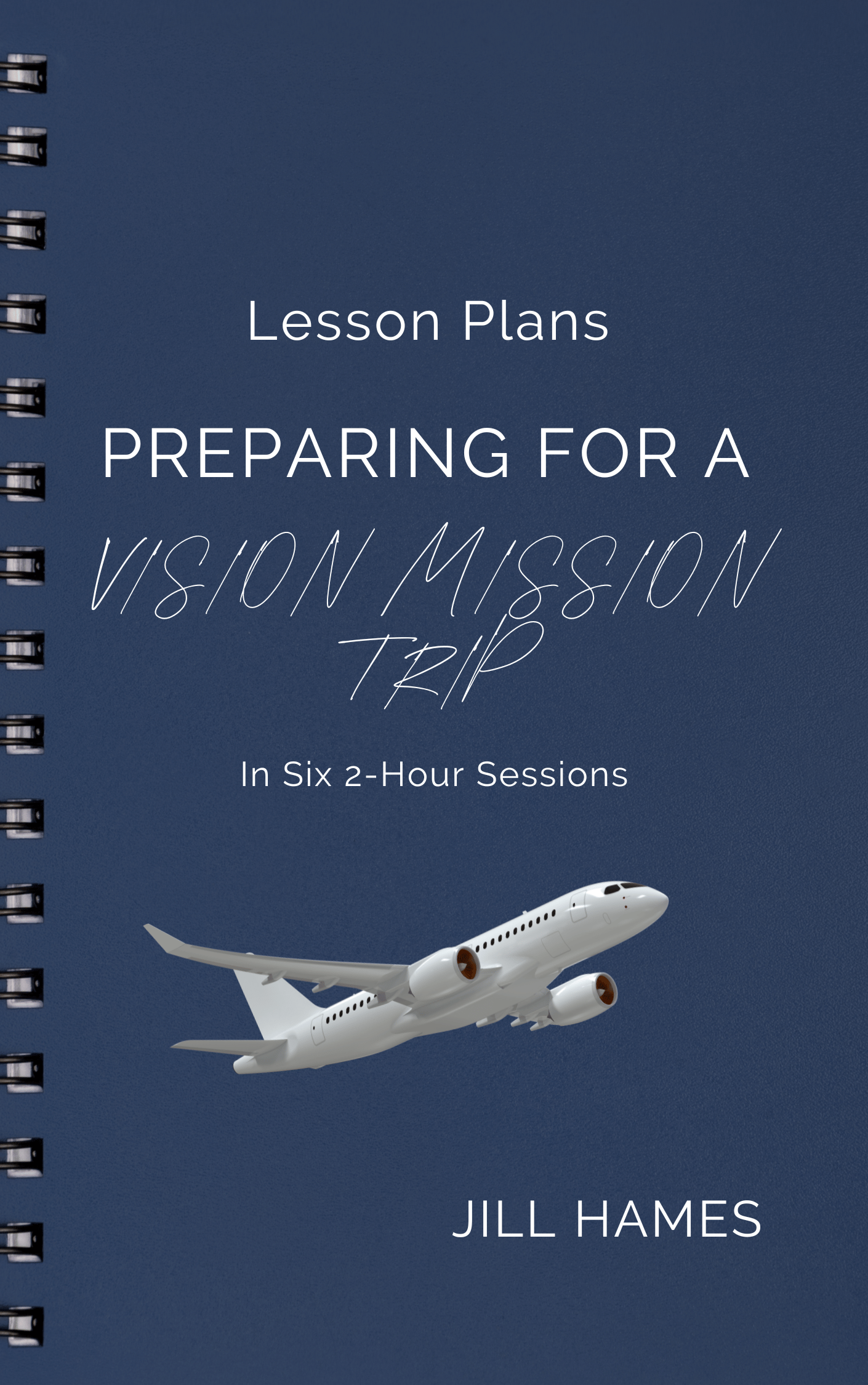
Six 2-hour lesson plans to prepare a team to go on a vision or missions trip. Includes facilitator’s notes, suggested resources, and participant handouts. Participant handouts are limited to 12 copies. Please contact Jill Hames if you need more.
Please note: This is not a plug-and-play curriculum. These lesson plans assume the facilitator has background knowledge in the topics. Please see the syllabus and facilitator requirements below. You may also contact Jill Hames about scheduling a synchronous or in-person class with your group.
Leader Background
This training course is primarily designed for groups going on vision trips, as distinct from missions trips. Because of this, leaders are expected to be more knowledgeable than may be expected from leaders whose primary job is to wrangle a group and manage logistics.
This course could also be led by an outside facilitator to train leaders who will then form and train teams.
To lead a vision trip, the leader should have:
Familiarity with the different types of vision trips and understand the difference between vision trips and missions trips
Familiarity with intentional conversation techniques (e.g. Asset Based Community Development listening conversations) and ways to formulate useful questions
Personal experience in the host country
Personal contact with leaders at the host church(es)
Syllabus
Session 1: Why a Vision Trip?
Discover what we already know, or think we know, about the host country
Explore data that may challenge our assumptions about our country compared to theirs
Consider the difference between Christian mission and missions
Learn the difference between a vision trip and a missions trip
Plan for food and money needs on the trip
Session 2: Cultural Intelligence, Part 1
Discover what we know about our culture
Explore how the same thing can mean something different in different cultures
Learn to talk about how we talk
Consider definitions of the Gospel
Plan for clothing needs on the trip
Session 3: Cultural Intelligence, Part 2
Discover what we “just know” and how that changes when we go to another culture
Learn about high and low context cultures
Explore indicators and practices of high and low context cultures
Consider challenges we may face in a high/low context culture
Plan for hygiene needs on the trip
Session 4: Support and Partnership
Discover how we understand the difference between support and partnership
Explore the difference between support and partnership in the context of churches in different countries
Learn about historical problems in Western missions work
Consider how historical problems may/may not influence missions work today
Plan for medical needs on the trip
Session 5: How to Ask Questions
Discover our metrics for rudeness and politeness
Explore context and other clues for how different cultures perceive the rudeness or politeness of different interactions and actions
Learn how to ask useful questions (The 5 Ws, Question Formulation Technique, etc.), including listening to understand
Consider how to summarize what has been learned in these five sessions for a full assembly of the sending church(es)
Plan for what the group will actually be doing (listening conversations, group-led project, host-church-led projects, etc.)
Session 6: Involving the Sending Church(es)
Short group presentations on what has been discovered, learned, and discussed over the past five sessions
Time for prayer and sending rituals
Remind all of the team’s purpose and the role the sending church(es) will have on their return
Enjoy a social meal between the team and the sending church(es)
Anticipated Outcomes
Participants will be able to explain the difference between a vision and a mission trip.
Participants will be able to discuss the difference between Christian mission and missions.
Participants will be able to identify the challenges in defining the Gospel as distinct from Christian practices and cultural ideals.
Participants will be able to identify and discuss context clues to help them decipher subverbal communication.
Participants will be able to identify aspects of high and low-context cultures.
Participants will be able to discuss the similarities and differences between support and partnership.
Participants will be able to identify and use methods for creating useful questions.
Participants will be able to present, in a group, to a group about what they have learned.
Participants will be able to succinctly state the purpose of the trip.
PDF Download
This is a digital product, so I can't issue a refund. If you experience a problem, please let me know.