
How Is the Church Year Divided?
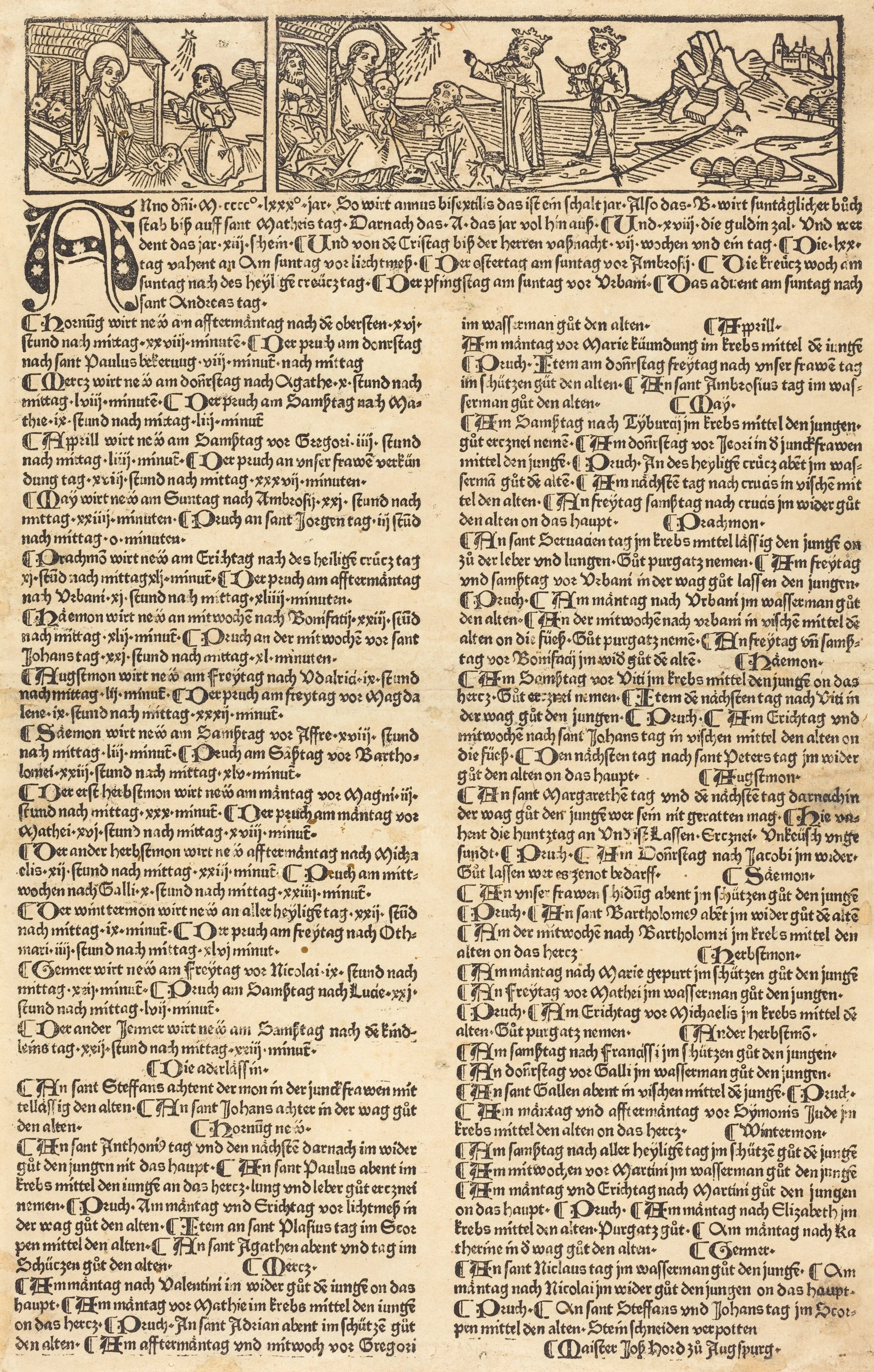
Calendar with the Nativity and Adoration; 1475; German
CEFR Level B2-C1
Originally published November 28, 2023
Updated July 21, 2026
What are the two parts of the Christian liturgical calendar?
The church calendar divides the 12-month calendar into two large parts. Each part has smaller divisions.
Each tradition may have slight variations on how they divide the church-year calendar. Below is a general overview from Lutheran and Catholic sources.
The Festive Half of the Church Year
The Festive Half of the church year includes Christmas and Easter. This is the first half of the liturgical calendar. The church Festive Season starts in December or November with Advent and ends in January after Epiphany.
The Non-Festive Half of the Church Year
The Non-Festive half of the church year is a bit of a misnomer. It starts after Easter and runs through the end of November. Much of these months is Ordinary Time, or a time without a special church holiday. Ordinary Time does not mean “unspecial.” Ordinary Time means the weeks are labeled with ordinal numbers (e.g. First Sunday after Pentecost, Second Sunday after Pentecost, etc.). Even though this half of the year is lumped together as Ordinary Time, it is broken by the church holidays of Lent, Easter, and Pentecost. Easter is the most important holiday of the Christian faith.
What are the smaller divisions of the liturgical year?
These are the Catholic liturgical seasons. Other Christian traditions follow a similar calendar. Search for “liturgical calendar” or “liturgical year” and you can easily find charts online that will have more precise divisions. You can also add a tradition’s name to find more precise results. For example, “Methodist liturgical calendar.”
Roman Catholic Liturgical Year Brief Outline
December: Advent and Christmas
January: Christmas, Epiphany, Ordinary Time
February: Ordinary Time
March: Lent
April-May: Easter, Pentecost
June-November: Ordinary Time