
What Do the Liturgical Colors Mean?
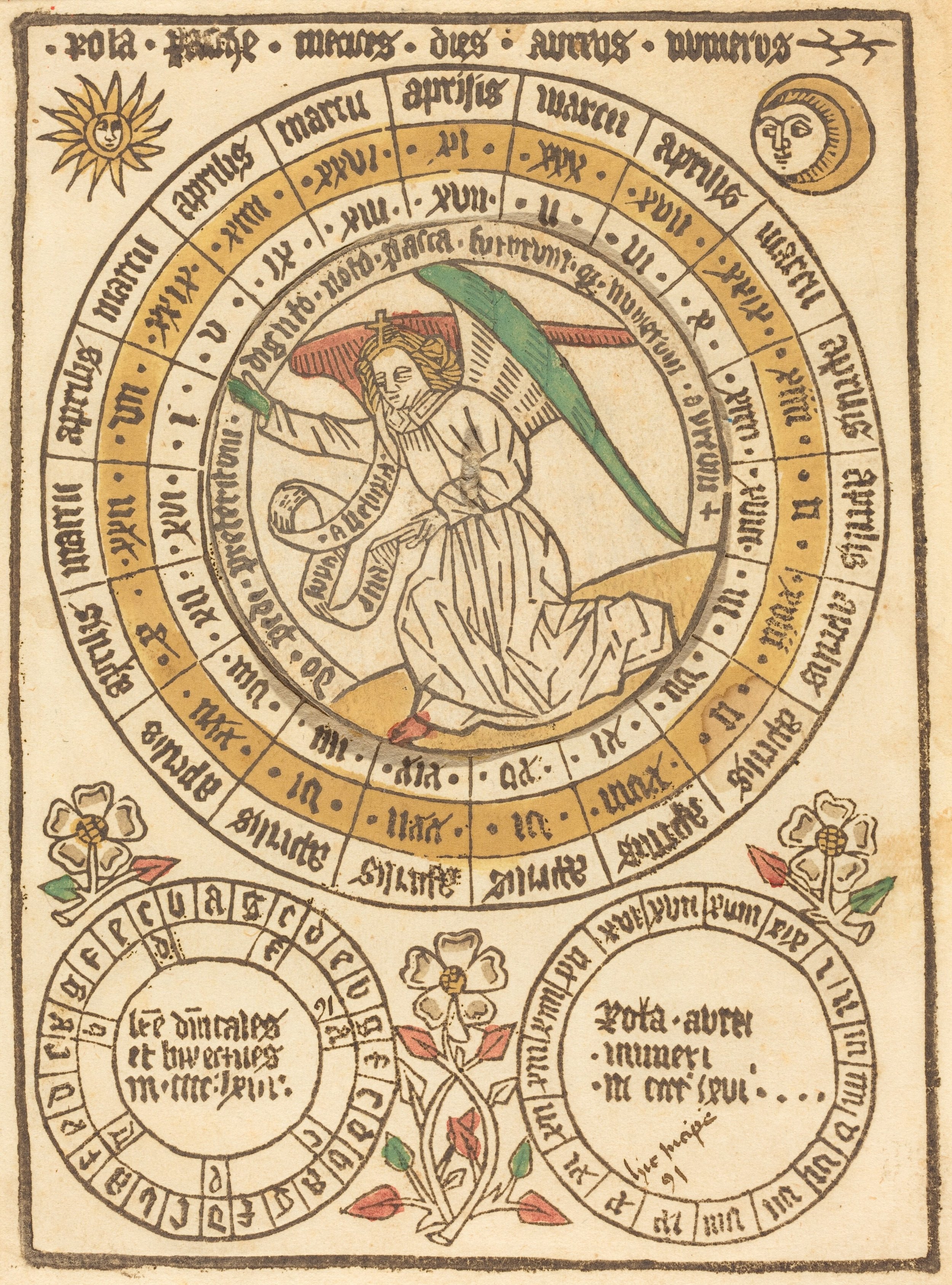
An Easter Calendar Beginning with the Year 1466; 1466; German
CEFR Level C1-C2
Updated July 21, 2026
Originally Published November 29, 2023
Each season of the church calendar has one or more colors associated with it. These colors are used in vestments, altar cloths, and similar items.
What colors are used for the church calendar?
The colors listed here are a summary of what colors Catholics use throughout the church year. The colors and their precise day of use may vary depending on the Christian tradition. For example, an African Methodist Episcopalian Church may use white for Christmas, purple for Lent, and green for Ordinary Time and not use the other colors.
Roman Catholic Colors for the Liturgical Year
Advent: Violet/Purple, Pink
Christmas: White, Gold
Epiphany: White, Gold
Lent: Violet/Purple, Pink
Easter: White, Red
Pentecost: Red
Ordinary Time: Green
What do the liturgical colors mean?
A search for “what do the liturgical colors represent” shows that most Christian traditions have similar meanings for each color, although there may be some alternative associations. Below is a simple summary of what the church year colors stand for.
Green: Hope
White, Gold: Purity, Innocence, Glory
Red: Fire, Charity, Love
Violet/Purple: Penance, Atonement
Pink: Rejoicing